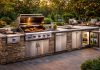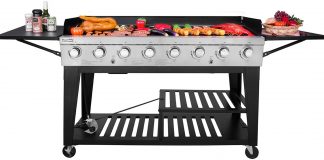
Outdoor kitchens have evolved from a backyard trend into a serious home investment—and in 2026, choosing the right setup matters more than ever. The demand for built in outdoor kitchen appliances 2026 is rising fast, especially among homeowners who want premium cooking performance without paying luxury prices. The good news: today’s best outdoor kitchen grills and high-end BBQ appliances under $3000 deliver performance that rivals much more expensive setups—if you know what to look for.
But here’s what most buying guides won’t tell you: the majority of outdoor kitchen projects don’t fail because of budget. They fail because of poor planning, mismatched appliances, and the temptation to buy features that look impressive in a showroom but do very little in actual use. That pattern is what this guide is designed to break.
By the time you finish reading, you’ll know which built-in outdoor kitchen appliances actually earn their place, how to choose the best outdoor kitchen grills under $3,000, how to phase your build to avoid overspending, and which mistakes consistently cost homeowners the most money.
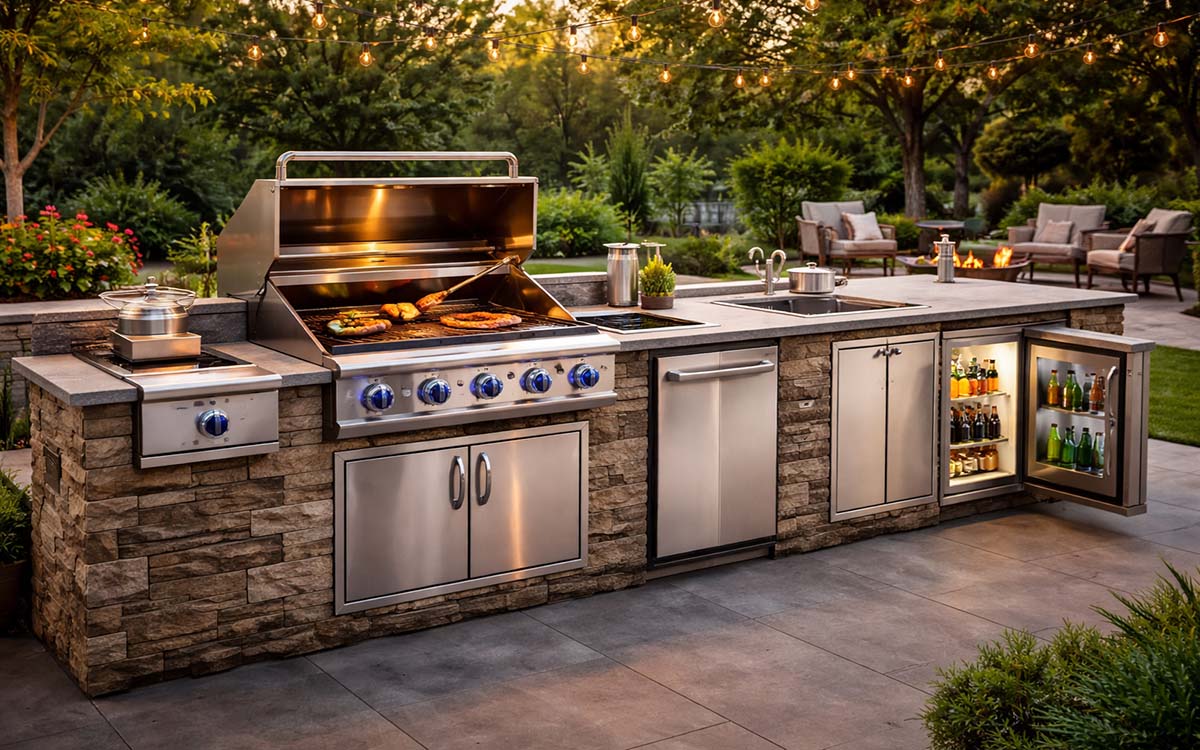
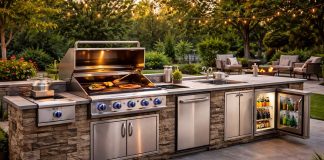
Why Built-In Outdoor Kitchen Appliances Are Worth the Investment
The difference between a built-in outdoor kitchen and a freestanding setup isn’t just aesthetic — it’s functional in ways that compound over time.
Built-in appliances are engineered specifically for permanent outdoor installation. The weather-sealing is different. The compressor technology in a proper outdoor refrigerator handles temperature swings that would destroy a standard indoor unit within a single season. The grill housing integrates flush with your countertop, eliminating the gaps where grease, moisture, and debris collect in freestanding designs.
From a pure workflow perspective, the upgrade is immediate. Your prep surface sits next to the grill. The refrigerator is three steps away rather than a trip back through the house. Storage is exactly where you need it. It sounds like a small thing until you’re hosting a group and realize you haven’t left the outdoor kitchen once.
There’s also the long-term value argument. A well-executed built-in outdoor kitchen adds measurable appeal to a home’s market value — particularly in warmer climates where buyers factor in year-round usability.
Outdoor Kitchen Trends in 2026 That Actually Affect What You Should Buy
Mid-range appliances have closed the performance gap significantly. This is the most buyer-relevant shift happening right now. High-end BBQ appliances under $3,000 are delivering results that would have cost $4,000 or more just a few years ago. If you’ve been holding off because you assumed quality required a luxury budget, that calculation has changed.
Infrared burners are now standard, not optional. For years, infrared was positioned as a premium upgrade on high-end grills. In 2026, it’s appearing consistently in the mid-range category — and if you care about properly searing meat, it’s the single most impactful feature to look for. The surface temperatures achievable with infrared are what create the crust on a steak that a standard burner simply can’t replicate.
Modular, phased builds have become the dominant buying strategy. Rather than trying to finish everything at once, smart buyers now plan Phase 1 (grill and storage) and Phase 2 (refrigerator and side burner) as deliberate stages. This protects your budget and lets you make better decisions on supporting appliances once you’ve actually lived with the core setup.
304 stainless steel is non-negotiable. Not 430 stainless, which is cheaper and corrodes noticeably faster in outdoor conditions — especially in humid or coastal environments. Any appliance or cabinet you’re considering should specify 304-grade construction.
Built-In vs. Freestanding: The Honest Comparison
Freestanding grills and outdoor appliances are portable, cheaper upfront, and easy to replace. If you’re cooking occasionally and have no interest in a permanent outdoor setup, they do the job.
The moment your goal becomes a true outdoor kitchen — with integrated countertops, seamless workflow, and appliances that function as a coordinated system — freestanding options stop making sense. They’re not built for permanent installation, they don’t integrate cleanly with cabinetry, and they tend to show their limitations faster than built-in appliances do.
For a serious outdoor kitchen build, built-in is the only direction worth planning around.
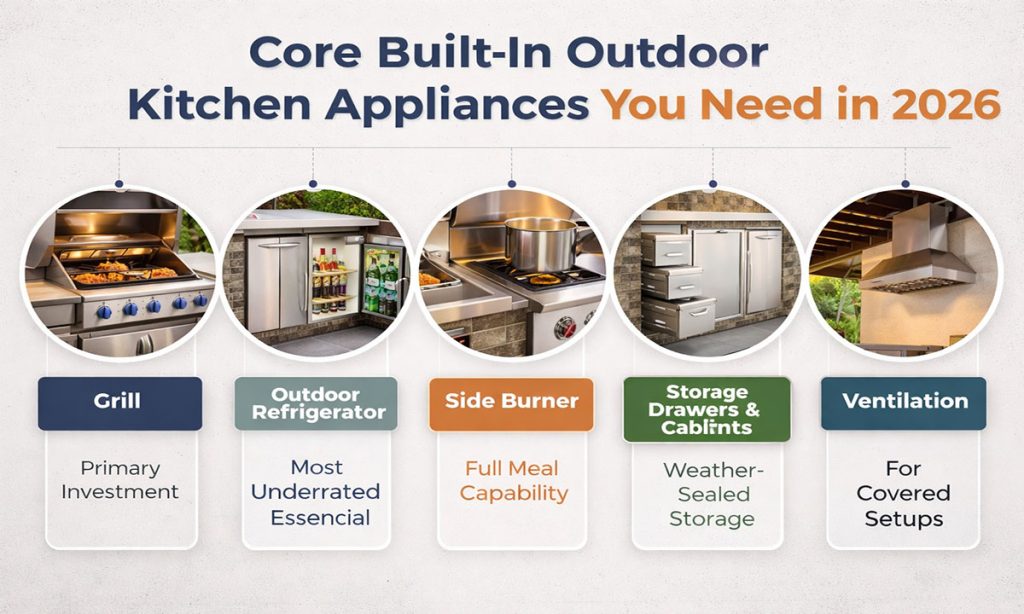
The Core Built-In Outdoor Kitchen Appliances 2026 You Actually Need
Think of your outdoor kitchen as a system with a hierarchy. Getting that hierarchy right is where most builds succeed or fall apart.
The Built-In Grill: Your Primary Investment
This is where the largest share of your budget belongs, and it’s worth repeating: everything else in your outdoor kitchen exists to support what happens on the grill surface. For 2026, look for a total BTU range between 60,000 and 90,000, a minimum of three burners (four gives you meaningful zone flexibility), and 304 stainless steel construction throughout. An infrared rear burner is worth prioritizing if your budget allows — it’s not a marketing feature, it’s a genuine performance difference for high-heat searing and rotisserie cooking.
The Outdoor Refrigerator: The Most Underrated Essential
This is the appliance people most commonly try to skip, and it’s consistently the one they regret not having. A quality outdoor refrigerator keeps proteins, marinades, and drinks within arm’s reach of the cooking surface. It eliminates the workflow interruptions that quietly frustrate hosts more than anything else.
The critical spec: outdoor-rated, with a compressor designed for ambient temperatures that regularly exceed 90°F. A standard bar fridge or “garage-rated” unit is not the same thing and will fail prematurely. Buy the right appliance once rather than replacing a cheaper one after a season.
The Side Burner: Full Meal Capability
A side burner — ideally dual-burner — is what transforms a grill station into a complete outdoor cooking environment. Sauces, side dishes, boiling, frying — these all need a dedicated burner separate from your grill. For homeowners who cook full meals outdoors rather than just proteins, a side burner moves from “nice to have” to genuinely essential.
Storage Drawers and Cabinets
Weather-sealed, rust-resistant storage keeps your tools, fuel, and supplies organized and protected. It’s easy to underestimate this until you’re mid-cook and digging through a wet, disorganized storage bin. Plan for it from the start.
Ventilation for Covered Setups
If your outdoor kitchen sits under a pergola, roof, or any covered structure, proper ventilation is a safety requirement — not an optional upgrade. Without it, heat and smoke accumulate in ways that create real hazards and accelerate appliance wear.
Best Built-In Outdoor Kitchen Grills Under $3,000 (2026)
These five grills represent the strongest options across different price points and use cases for the 2026 market.
Napoleon Built-In Prestige 500 – Best Overall
Napoleon has built a reputation for consistency at this price tier, and the Prestige 500 built-in is the clearest reason why. The infrared rear burner handles rotisserie and high-heat searing reliably. Heat distribution across the main burners is genuinely even — which sounds like a basic expectation but isn’t guaranteed at this price point. The stainless steel construction holds up well in outdoor conditions, and Napoleon’s parts availability and warranty support are stronger than most competitors in this range.
If you want one of the best outdoor kitchen grills that simply performs year after year without demanding attention, this is the one to start with.
Blaze Prelude LBM 32-Inch 4-Burner – Best Value
Blaze has carved out a strong position in the outdoor kitchen market by delivering mid-range pricing with above-average build quality. The Prelude LBM gives you four burners, dependable heat control, and construction that doesn’t feel like a compromise. For buyers targeting high-end BBQ appliances under $3,000 who don’t want to sacrifice cooking performance, this grill is the strongest value argument in the category.
Bull Angus 4-Burner – Best for High Output
The Angus runs around 75,000 BTU across its burners, which puts it solidly in serious-cooking territory. The cooking surface is large enough to run multiple protein cuts simultaneously, and the heavy-duty build quality holds up well under frequent use. If you regularly cook for twelve or more people and need a grill that can keep up with that volume, this is the right tool.
Blaze 40-Inch 5-Burner LTE – Best for Entertaining
Five burners and a 40-inch cooking surface give you the ability to run independent temperature zones simultaneously — a capability that genuinely changes how you host. The LED lighting is practical rather than decorative, making evening cooking significantly easier. If your outdoor kitchen is built around entertaining rather than weeknight family dinners, this is the grill to design your layout around.
Bull Outlaw Drop-In – Best Entry-Level Option
Straightforward, dependable, and priced accessibly. If you’re building your first outdoor kitchen and want to understand how a built-in setup functions before committing to a premium grill investment, the Outlaw is a sensible starting point. It’s not going to impress you, but it won’t disappoint you either — and for a first build, that’s a reasonable trade.
How to Choose the Best Outdoor Kitchen Grill: What Actually Matters
Heat distribution beats BTU numbers every time. Raw heat output tells you how much energy the burners produce — it says almost nothing about whether your food cooks evenly. A grill with 90,000 BTU and poor burner layout will cook worse than a 65,000 BTU grill with well-designed heating elements and quality grates. Look for reviews that specifically address heat distribution, not just power specs.
Grate material matters more than most buyers realize. Cast iron and stainless steel grates hold and transfer heat differently. Cast iron retains heat better for searing; stainless is lower maintenance. Either is a good choice — what you want to avoid is thin, lightweight grates that lose heat the moment cold proteins hit the surface.
Burner count should match your actual use case. Three to four burners covers family cooking with room for zone management. Five burners is genuinely useful for larger groups where independent temperature control across multiple cooking zones makes a practical difference. Beyond that, you’re paying for capacity you’re unlikely to use.
Always specify 304 stainless steel. Ask directly if the product listing isn’t clear. The difference in corrosion resistance over five to ten years of outdoor exposure is significant enough to affect your long-term costs.
Supporting Appliances: What to Add and When
Outdoor refrigerator — Add in Phase 1 if your budget allows. If it doesn’t, make it the first Phase 2 purchase. The workflow impact is immediate.
Side burner — Phase 2 for most builds, Phase 1 if you regularly cook complete meals outdoors.
Trash and recycling drawer — More useful than it sounds during active hosting. Keeps waste off the counter and out of sight.
Ice bin or kegerator — Worth adding for frequent entertainers. Easy to skip if you host occasionally.
Pizza oven — Genuinely appealing, but used far less often than most buyers anticipate. Only add one if you’re already making pizza regularly.
Warming drawer — Practical in catering-scale setups. Most home cooks find they rarely need it.
Sink — Adds plumbing complexity and cost. Worth it in a premium build; optional for most homeowners.
Realistic Budget Ranges for 2026
Budget Setup: $2,500–$4,000 A functional Phase 1 build: mid-range built-in grill, basic outdoor-rated refrigerator, minimal storage. Everything works; nothing is premium.
Balanced Setup: $4,000–$7,000 The most popular configuration in 2026. A quality grill, proper outdoor refrigerator, side burner, and a full storage system. This is where value and performance align most cleanly.
Premium Setup: $7,000+ Four to five-burner grill, advanced refrigeration, power burner, integrated sink, and full cabinetry. Designed for homeowners who entertain frequently and want a kitchen that matches indoor performance standards.
Mistakes That Cost Buyers the Most
Buying appliances not rated for outdoor use. Indoor and garage-rated appliances are not built for the temperature swings and moisture exposure of true outdoor environments. They fail, and mid-project replacements cost more than buying correctly upfront.
Poor layout planning. Map your actual cooking workflow before finalizing any design: where you prep, where you cook, where you plate, where waste goes. The grill should anchor the layout. Counter space on at least one side of the grill is non-negotiable. A bad layout is frustrating every single time you cook.
Overbuying appliances in Phase 1. Budget pressure from trying to do everything at once almost always forces compromises on the things that matter most — usually the grill or the refrigeration. Phase your build intentionally.
Final Buyer Checklist Before You Purchase
- Are all appliances specifically outdoor-rated?
- Is grill and cabinet construction confirmed as 304 stainless steel?
- Does your layout support a natural prep → cook → serve workflow?
- Is a quality grill the largest share of your Phase 1 budget?
- Is refrigeration included in Phase 1, or clearly planned for Phase 2?
FAQ Section
What are the best built-in outdoor kitchen appliances in 2026?
The best built-in outdoor kitchen appliances in 2026 include a high-quality built-in grill, outdoor-rated refrigerator, side burner, and weatherproof storage. These form the core of a functional outdoor kitchen.
Are built-in outdoor grills worth it?
Yes, built-in outdoor grills offer better durability, heat control, and integration compared to freestanding models, making them ideal for long-term outdoor kitchen setups.
Can I build an outdoor kitchen under $3000?
Yes, you can start with a built-in grill and basic storage under $3000, then expand your setup in phases by adding appliances like a refrigerator or side burner.
What is the best material for outdoor kitchen appliances?
304 stainless steel is the best material because it resists rust, corrosion, and extreme weather conditions.
The Bottom Line
The best built-in outdoor kitchen appliances for 2026 aren’t about having the longest feature list or the highest BTU count. They’re about building a system where every component pulls its weight and everything works together the way you actually cook.
Get the grill right. Don’t skip the refrigerator. Plan your layout before you spend a dollar. Then build outward from those decisions at a pace your budget supports.
That’s the outdoor kitchen that gets used every weekend — not the one that gets admired once and then mostly ignored. Whether you’re focused on the best outdoor kitchen grills under $3,000 or shopping high-end BBQ appliances with a larger budget, the strategy is the same: start with the essentials, build with intention, and expand when it genuinely improves how you cook.